
Educate experienced plumbers and employers on complex material compatibility and performance issues in commercial plumbing systems to enhance job outcomes and establish BuildMaterialsHire’s expertise.
Plumbing drives Canada’s commercial and industrial projects, with over 3,000 new jobs projected by 2030 (BuildForce Canada, 2025). As a third-party recruiter, BuildMaterialsHire connects plumbers with employers who demand expertise in complex material challenges, such as ensuring compatibility between copper, PEX, and fittings in high-pressure systems. This guide dives into advanced material compatibility issues, their impact on commercial plumbing, and how mastering them can elevate your career.
Why Material Compatibility Matters
In commercial plumbing, material compatibility—ensuring pipes, fittings, and connectors function seamlessly—prevents catastrophic failures like galvanic corrosion, leaks, or pressure drops. For example, mismatched copper and steel pipes can corrode 30% faster, costing thousands in repairs. Plumbers with expertise in compatibility meet stringent codes like CSA B214 or Ontario’s Building Code, making them top candidates. This knowledge can improve project efficiency by 20%, per industry estimates, and boost your value to employers.
Key Plumbing Materials and Compatibility Challenges
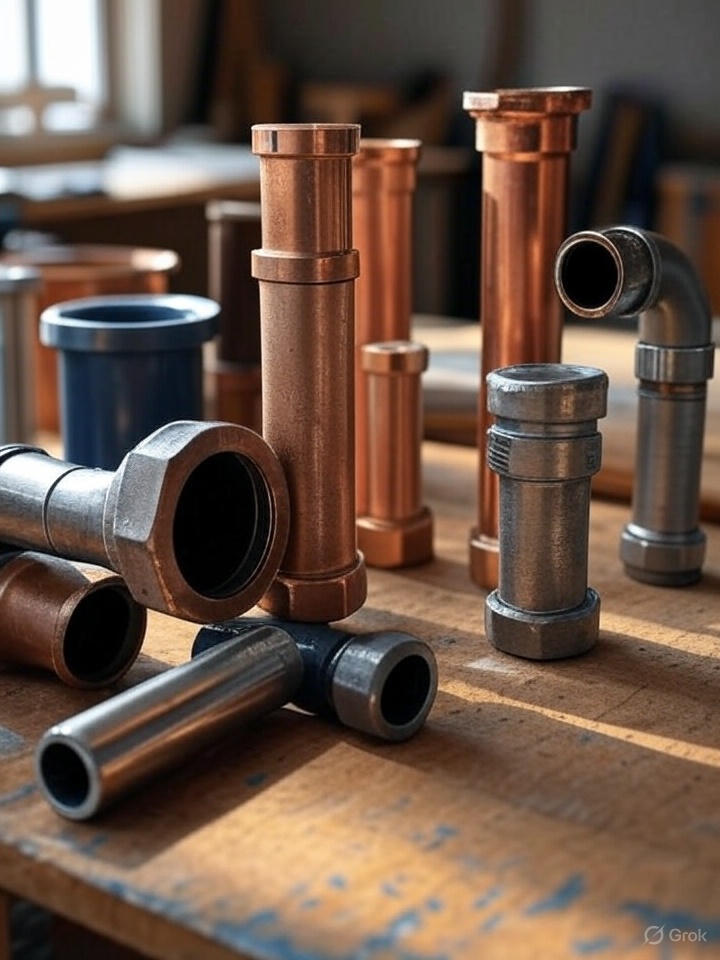
- Copper Piping:
- Properties: Corrosion-resistant, durable, ~$10/meter. Ideal for high-pressure water systems in office towers and hospitals.
- Compatibility Issues: Direct contact with dissimilar metals (e.g., steel or galvanized fittings) triggers galvanic corrosion, reducing lifespan. Requires dielectric unions (~$5–$10 each) to block electron transfer.
- Applications: Hot/cold water lines in commercial settings.
- PEX Piping:
- Properties: Flexible, cost-effective (~$2/meter), freeze-resistant. Used in retail and office retrofits.
- Compatibility Issues: Incompatible with uncoated brass fittings in high-temperature systems (>180°F), risking degradation. Requires PEX-specific connectors or stainless steel fittings.
- Applications: Water supply lines in modern commercial spaces.
- PVC/CPVC Piping:
- Properties: Lightweight, ~$1.50/meter. CPVC handles hot water up to 200°F.
- Compatibility Issues: Limited to low-pressure drainage; incompatible with potable water in some codes due to chemical leaching risks. Requires solvent-welded joints for secure connections.
- Applications: Drainage systems in commercial facilities.
- Fittings (Dielectric Unions, PEX Connectors):
- Properties: Dielectric unions prevent corrosion between copper and steel (~$10/unit); PEX connectors ensure secure joins (~$2–$5).
- Compatibility Issues: Mismatched fittings (e.g., brass with PEX in high-heat systems) can fail under pressure. Selection must align with pipe material and system demands (e.g., 100 psi).
Strategies to Master Material Compatibility
- Study Electrochemical Interactions: Use resources from the Canadian Construction Materials Centre to understand galvanic corrosion risks. For example, copper-to-steel connections need dielectric unions to prevent electron transfer.
- Adhere to Codes and Standards: Ensure compliance with CSA B214 or provincial codes specifying compatible materials for commercial systems (e.g., maximum pressure ratings).
- Leverage Diagnostic Tools: Use pressure testers and thermal imaging to verify system integrity post-installation, identifying compatibility issues early.
- Gain Specialized Experience: Work on complex projects, like hospital plumbing with hybrid copper-PEX systems, to master compatibility techniques.
- Pursue Advanced Certifications: Red Seal plumbing certification includes material compatibility training, enhancing expertise for high-stakes roles.
BuildMaterialsHire recommends showcasing compatibility expertise on resumes (e.g., “Red Seal Plumber, skilled in copper-PEX integration for commercial systems, 8+ projects”) to attract top employers.
Industry Trends in Plumbing Materials
- Hybrid Systems: Copper-PEX combinations are up 10% in commercial projects (BuildForce Canada, 2025) for cost-efficiency and durability, requiring advanced compatibility skills.
- Anti-Corrosion Innovations: Polymer-coated dielectric fittings, growing 15% in adoption, reduce corrosion risks in mixed-material systems.
- Smart Plumbing Systems: Demand for plumbers skilled in materials for sensor-based water systems (e.g., compatible fittings) is up 12% for smart buildings.
BuildMaterialsHire’s Role
We connect plumbers with employers in cities like Toronto, Calgary, and Vancouver, offering:
- Job matching for roles requiring advanced material expertise (e.g., hybrid copper-PEX systems).
- Resume guidance to highlight skills (e.g., “Managed dielectric union installations in 10+ commercial projects”).
- Interview coaching for complex questions like “How do you prevent corrosion in mixed-material plumbing systems?”
Employers benefit from our pre-screened talent, ensuring hires who excel in material compatibility for high-stakes projects.
Take the Next Step
Mastering material compatibility can transform your plumbing career. BuildMaterialsHire matches plumbers with roles that value expertise in copper, PEX, and fittings. Visit buildmaterialshire.ca for a free consultation and explore our resources. What complex material issue have you tackled? Share in the comments!